Why Driveway Sealcoating Matters — and What to Expect in Nampa
If you’ve lived in the Treasure Valley for any length of time, you already know what the climate can do to a driveway. Hot summers, hard freezes, and the occasional stretch of freeze-thaw cycles in early spring — none of it is kind to asphalt. That’s why driveway sealcoating in Nampa, Idaho is less of an optional upgrade and more of a smart maintenance habit.
This isn’t marketing language. It’s just what happens when you leave untreated asphalt exposed to the elements for too long.
What Sealcoating Actually Does
Asphalt is a porous material. Fresh out of installation, it’s dense and flexible, but over time UV rays oxidize the surface, turning it from dark black to a faded gray. That oxidation isn’t just cosmetic — it means the binder holding the aggregate together is drying out. Once cracking starts, water has a path in.
Sealcoating applies a thin protective layer — typically a coal tar emulsion or asphalt-based sealer — that seals those surface pores and slows the oxidation process. Think of it less like painting your driveway and more like applying sunscreen. You’re not changing the surface, you’re protecting what’s already there.
In Nampa specifically, two things accelerate asphalt wear more than anywhere else: UV exposure during the long Idaho summers, and water infiltration during freeze-thaw cycles between November and March. When water seeps into small surface cracks and then freezes, it expands. That expansion pushes the crack wider. After a few winters, what started as a hairline becomes a pothole — and at that point, you’re looking at patching or full replacement, not just sealing.
When to Sealcoat
New asphalt should cure for at least 90 days — some contractors recommend waiting a full year — before you apply any sealer. Sealcoating too soon traps oils that haven’t fully evaporated, which can leave the surface soft and slow to harden.
After the initial cure, a well-maintained residential driveway typically needs resealing every two to four years, depending on sun exposure, traffic volume, and whether the previous application was done correctly. If the surface is already showing gray oxidation, surface cracking, or small raveling along the edges, it’s probably time.
One thing worth knowing: sealcoating is not a crack filler. If your driveway has cracks wider than about a quarter inch, those need to be cleaned and filled before sealing. Applying sealer over open cracks doesn’t seal them — it just covers them temporarily. A reputable contractor will tell you this upfront.
What the Process Looks Like
Most residential driveway sealcoating jobs in Nampa follow the same basic sequence:
The crew starts by cleaning the surface — blowing off debris, removing any oil stains with a degreaser, and trimming grass that’s crept onto the edges. Oil stains in particular need attention because sealer doesn’t bond well to contaminated asphalt.
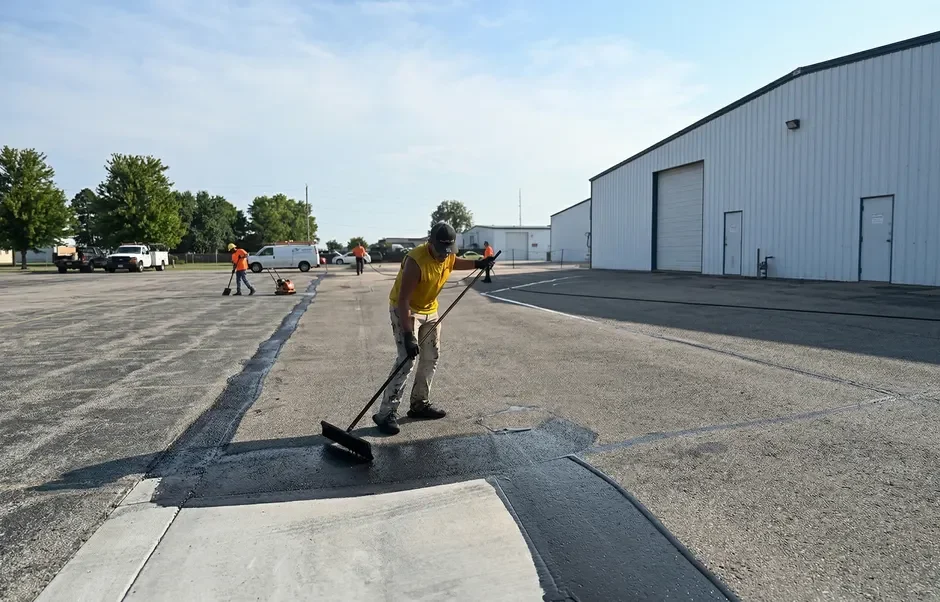
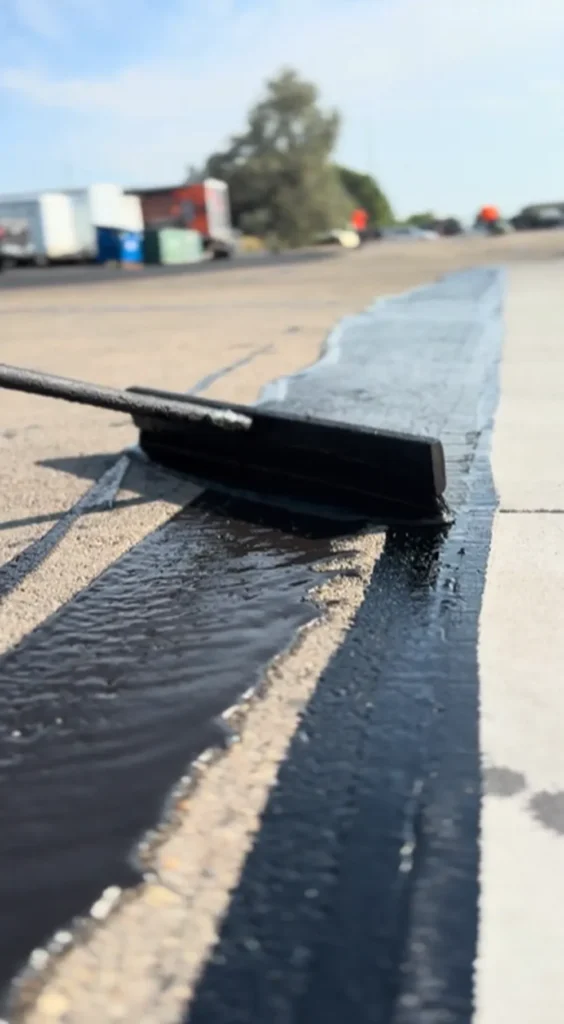
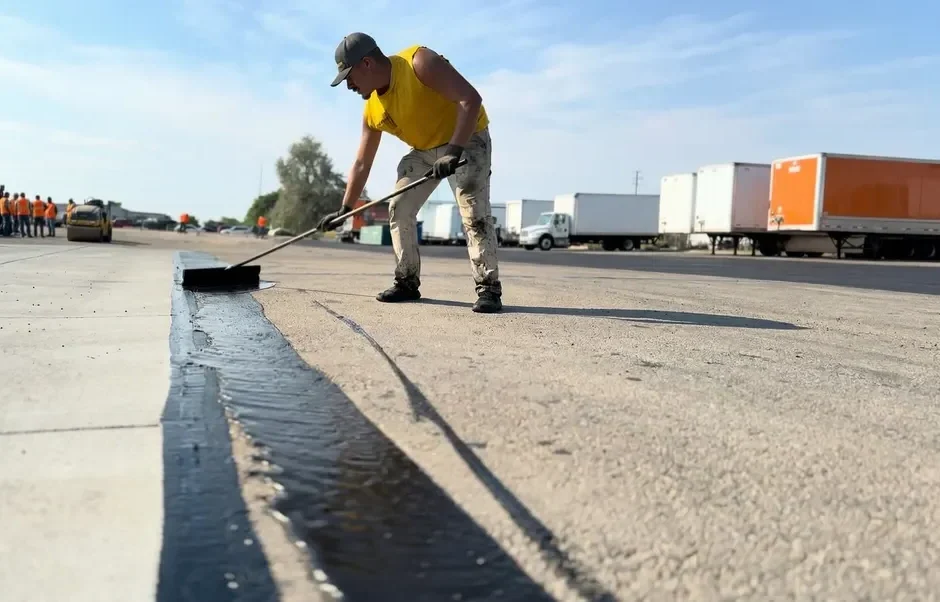
From there, cracks are filled using hot pour or cold pour crack filler, depending on their size and the ambient temperature. Once the filler has cured, the sealer goes on — typically two coats, applied by squeegee, brush, or spray depending on the crew’s method and the driveway’s condition.
Drying time matters. Under good conditions — warm temperatures, low humidity, direct sun — a sealed driveway is ready for foot traffic in about 24 hours and vehicles in 48 to 72. In the fall, when evenings drop below 50°F, drying can take longer. Most contractors in the area won’t apply sealer in temperatures below 50°F or if rain is expected within 24 hours.
Choosing a Contractor in Nampa
There’s no shortage of options in the Treasure Valley, but a few things separate a quality job from a mediocre one.
Material matters. Some lower-cost operations use heavily diluted sealer or single-coat applications to save time. A diluted product wears through in a year or two and leaves the surface uneven. Ask what product they’re using and whether they apply one coat or two.
Preparation matters more. The single biggest factor in how long a sealcoating job holds is how well the surface was cleaned and prepped beforehand. A poorly prepared surface leads to peeling and bubbling, regardless of how good the sealer is.
Finally, timing matters. The best window for driveway sealcoating in Nampa runs from late spring through early fall — roughly May through September — when daytime temperatures are consistently above 70°F and the chance of overnight freezes is low. Some crews will push into October, but that requires watching the forecast carefully.
Driveway Sealcoating in Nampa, Idaho: Protect Your Property and Get a Free Estimate Today!
Restore your driveway’s deep black finish and boost your home’s curb appeal. High-quality sealcoating is the best protection for your property.