Parking Lot Sealcoating in Boise: What Property Owners Should Actually Know
A parking lot doesn’t fail overnight. It deteriorates gradually — first the color fades, then fine cracks appear along the surface, then those cracks widen, edges start to crumble, and eventually you’re dealing with potholes that create liability exposure and frustrate every customer or tenant who pulls in. The progression is predictable, and so is the fix: consistent maintenance starting with sealcoating.
For commercial property owners and managers in the Treasure Valley, parking lot sealcoating in Boise, Idaho is one of the highest-return maintenance investments available. Not because it transforms a failing lot, but because it protects one that’s still in reasonable condition — slowing the deterioration cycle before it becomes expensive to reverse.
Why Parking Lots Deteriorate Faster Than Driveways
It’s worth understanding what’s working against your asphalt before talking about how to protect it.
Boise’s climate puts asphalt through a real stress test. Summer temperatures regularly push into the mid-to-upper 90s, and UV exposure is intense at the elevation. That UV radiation oxidizes the asphalt binder — the tar-like compound that holds the aggregate together — causing the surface to harden, become brittle, and lose its original flexibility. A parking lot that was laid down jet black will start going gray within a few years if nothing is done.
Then come the winters. The Boise area averages enough freeze-thaw cycles between November and March to cause real damage. Water finds its way into small surface cracks, freezes, expands, and forces those cracks wider. Do that repeatedly over two or three winters and a surface crack becomes a structural one.
Commercial parking lots also carry loads that residential driveways don’t — delivery trucks, service vehicles, SUVs sitting in the same spot every day. That concentrated weight accelerates surface wear, particularly near entry points, dumpster pads, and drive-through lanes where turning stress is highest.
What Sealcoating Does — and Doesn't Do
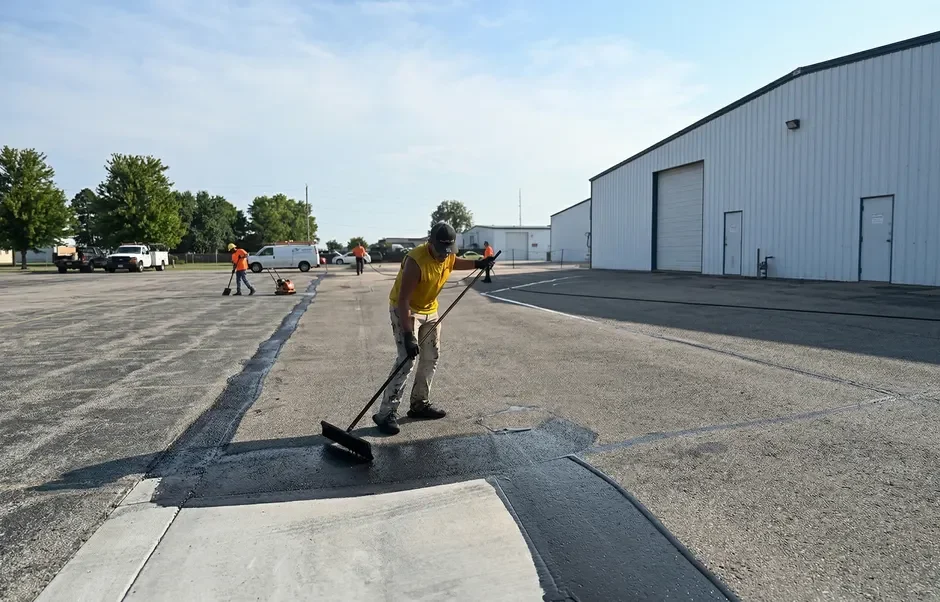
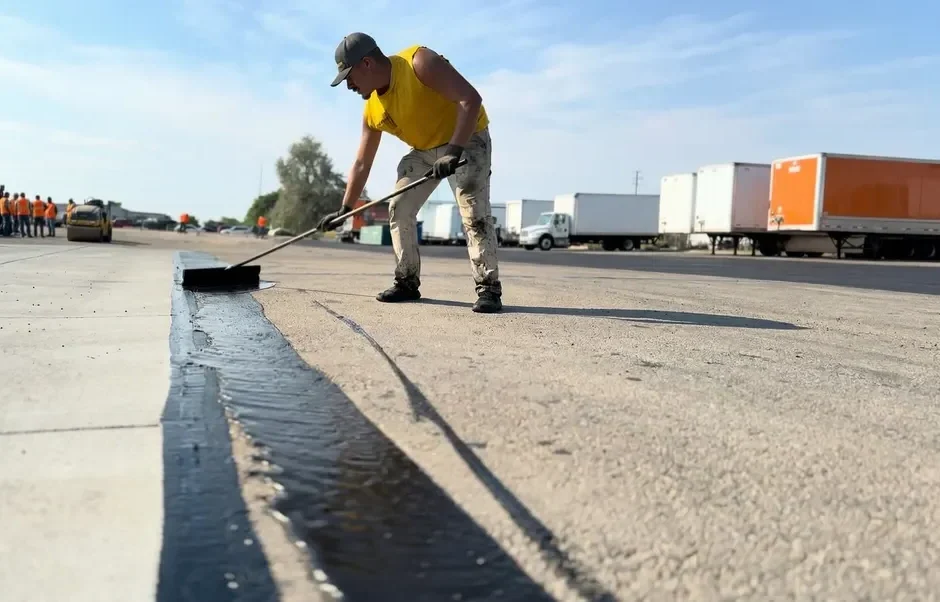
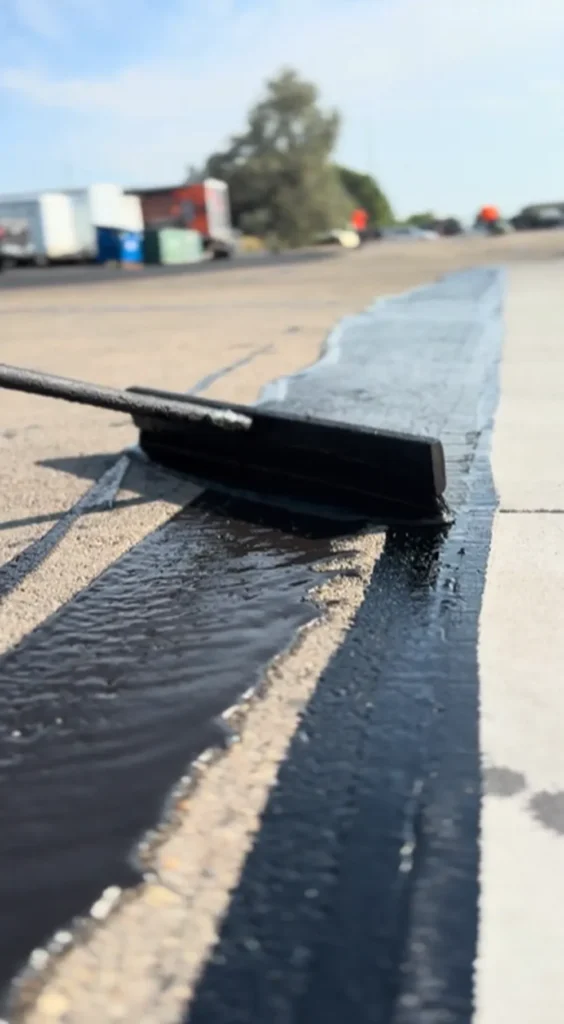
Sealcoating applies a thin protective coating — typically a refined coal tar emulsion or asphalt-based sealer — over the existing pavement surface. When applied correctly, it seals the surface pores, slows UV oxidation, and creates a barrier against water infiltration, fuel spills, and road salts.
It also restores the dark appearance of the lot, which matters more than it might sound. A clean, well-maintained parking lot is one of the first things a customer sees. A faded, cracked lot signals neglect — even if everything inside the building is pristine.
What sealcoating doesn’t do is structural repair. It won’t fill wide cracks, stabilize sunken areas, or reverse alligator cracking — that web-like pattern that indicates base failure underneath. Those issues require crack filling, patching, or in severe cases, milling and overlay. Any reputable contractor will evaluate the lot first and recommend the right scope of work before any sealer touches the surface.
A common mistake is applying sealcoating over cracks that haven’t been addressed. The sealer bridges the crack visually but doesn’t bond to the edges, and within one freeze-thaw cycle it peels away and the crack reappears — worse than before.
The Application Process for a Commercial Lot
A properly executed parking lot sealcoating in Boise, Idaho starts well before the spray rig shows up.
Surface preparation is everything. Crews should blow the entire lot clean of debris, treat oil and fuel spots with a degreaser (oil-contaminated asphalt won’t bond with sealer), and address any cracks that fall within the repairable range — typically anything from hairline up to about three-quarters of an inch. Cracks wider than that need a different approach.
Once prep is complete, the sealer is applied in two coats. The first coat bonds to the asphalt surface; the second builds the protective layer. Single-coat applications are faster and cheaper, but they sacrifice durability — a two-coat job lasts measurably longer, especially under commercial traffic.
For larger lots, crews typically rope off sections and apply in phases so that part of the lot remains accessible during the project. This matters for businesses that can’t close for a full day. Drying time under Boise’s summer conditions — warm, dry, direct sun — runs 24 hours for foot traffic and 48 to 72 hours before vehicles should be on it.
The ideal application window in the Boise area is late April through September. Sealer needs pavement surface temperatures above 50°F to cure properly, and rain within 24 hours of application will wash it off before it bonds.
How Often to Reseal and What to Budget For
Most commercial parking lots benefit from resealing every two to three years, though this depends on traffic volume, sun exposure, and whether the lot was adequately prepped and sealed during the previous service. Lots that see heavy daily traffic — retail centers, apartment complexes, restaurants — tend to need more frequent attention than low-traffic office parks.
Pricing for parking lot sealcoating in Boise, Idaho varies based on lot size, condition, and scope of prep work required. Crack filling and edge work add to the base cost but are generally worth doing rather than skipping — deferred prep leads to faster sealer breakdown and more frequent reapplication.
The most useful frame for thinking about the cost: compare it to what asphalt overlay or full replacement runs per square foot. Sealcoating on a consistent schedule is a fraction of that figure. The property owners who avoid major pavement expenses over time are almost always the ones who maintained a consistent sealcoating schedule rather than waiting until damage forced their hand.
Driveway Sealcoating in Nampa, Idaho: Protect Your Property and Get a Free Estimate Today!
Restore your driveway’s deep black finish and boost your home’s curb appeal. High-quality sealcoating is the best protection for your property.