Why Parking Lot Lines Matter More Than Most Property Owners Realize

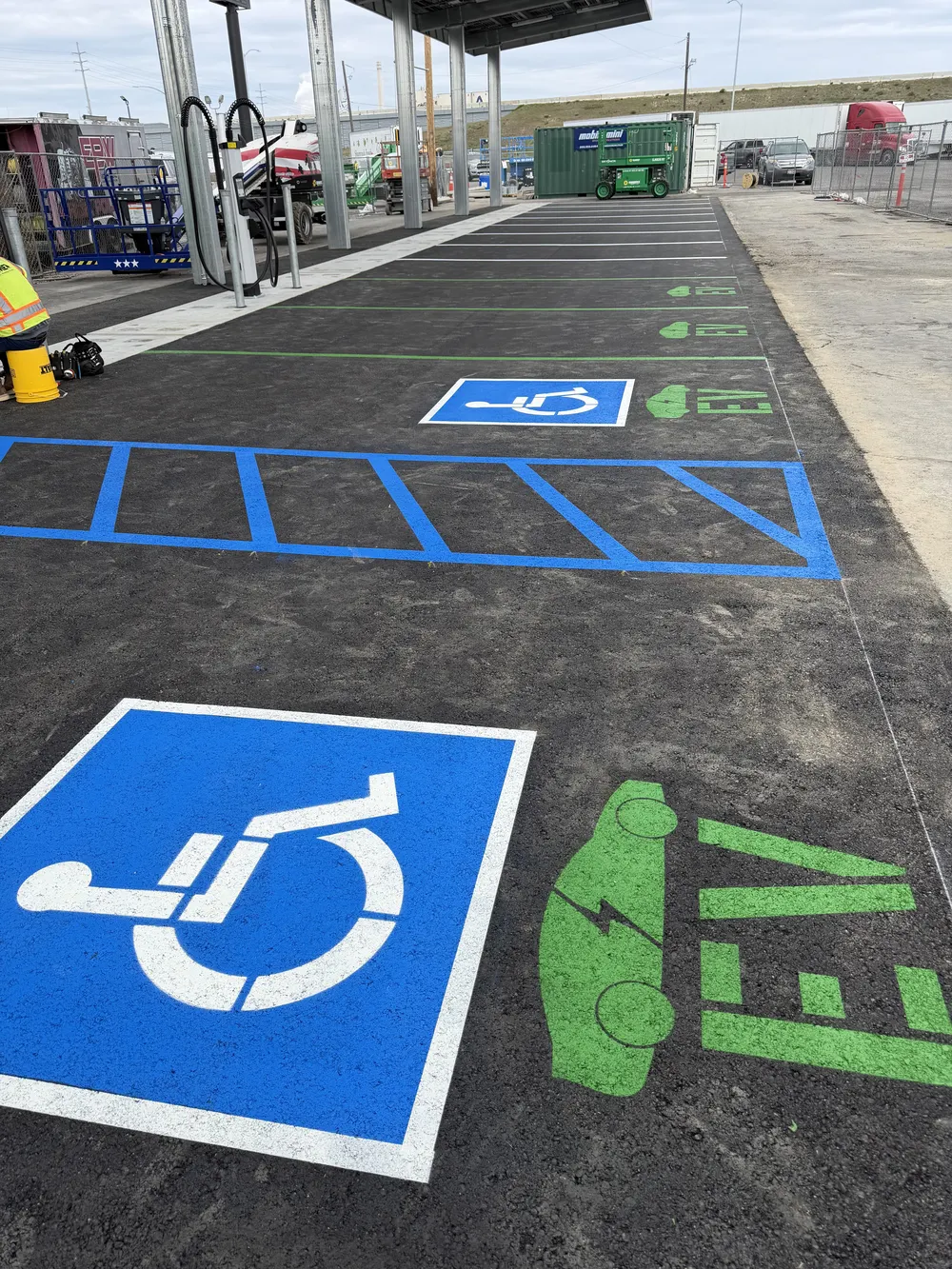
Freshly completed parking lot sealcoating and striping at Heritage Social Club, featuring bright white parking stall lines, a blue ADA handicap accessible space with wheelchair symbol, and a Superior Striping crew member visible near the building entrance under a clear blue sky.

Walk into any busy parking lot and you’ll notice immediately when the striping is faded or missing. Cars parked at odd angles, unclear traffic flow, pedestrians weaving between bumpers. It feels chaotic, and it is. What looks like a minor cosmetic issue — worn-down paint on asphalt — actually affects safety, liability, and how customers perceive your property before they even walk through the door.

For commercial and municipal properties across the Treasure Valley, maintaining clear, well-maintained parking lot lines isn’t just a nice-to-have. In most cases, it’s a legal requirement.

Safety First — and That's Not a Cliché

Parking lot accidents are more common than most people assume. The National Safety Council estimates that tens of thousands of crashes occur in parking lots and garages every year in the U.S. Many of those involve pedestrians.

Clear line striping guides drivers through predictable patterns. When lanes are well-marked, drivers know where to turn, where to yield, and where pedestrians are expected to cross. Remove that structure — or let it fade to the point where it’s barely visible — and you’ve introduced genuine ambiguity into a space where people are distracted, moving slowly, and often not paying full attention.

In Idaho, parking lots that see heavy seasonal use — think shopping centers in Boise, Nampa, or Meridian during the holidays — take especially hard wear. Sun exposure during long summer months bleaches thermoplastic and paint faster than in milder climates, and the freeze-thaw cycles through winter physically break down the asphalt surface that striping adheres to. What looked sharp in April can look tired by September.

ADA Compliance Is Non-Negotiable

One of the most important functions of professional line striping services is ensuring ADA-compliant accessible parking. The Americans with Disabilities Act sets specific requirements: the number of accessible spaces relative to total lot size, their dimensions, the required access aisle widths, and signage placement.

A standard accessible space must be at least 8 feet wide with a 5-foot access aisle. Van-accessible spaces require an 8-foot aisle. These aren’t suggestions — non-compliance can result in federal complaints, fines, and costly retrofits that would have been far cheaper to get right from the start.

This is an area where DIY striping or using a contractor unfamiliar with ADA standards creates real risk. A professional striping service in Idaho will know the current requirements and lay out accessible spaces accordingly, including the correct blue paint, international symbol of access, and any required slope considerations on the surface itself.

First Impressions Are Formed in the Parking Lot

It might sound like an overstatement, but customers form opinions about a business before they get to the front door. A parking lot with crisp, bright striping reads as well-maintained and professional. A lot with faded, cracked, or inconsistent markings sends a different message — one that’s hard to shake once it’s formed.

This is particularly relevant for retail, medical offices, restaurants, and any business where repeat customers are the backbone of revenue. In competitive markets like the Treasure Valley, where new commercial development is constant, presentation matters.

Fresh parking lot lines in Idaho’s high-UV environment typically last two to three years before they need restriping, though heavy-traffic lots may need attention sooner. Scheduling regular line striping maintenance — rather than waiting until lines are nearly invisible — is a much easier conversation to have with customers and tenants than explaining why someone got into an accident in your lot.

Traffic Flow and Space Efficiency

Beyond safety and compliance, good striping simply makes a parking lot work better. Thoughtfully laid-out lines maximize the number of usable spaces without making the lot feel cramped. Directional arrows reduce confusion at intersections within the lot. Fire lane markings keep emergency access clear. Loading zone designations prevent passenger vehicles from blocking areas reserved for deliveries.

All of this depends on accurate, professional layout — not just painting lines, but understanding how drivers actually move through a space. An experienced striping contractor will assess traffic entry and exit points, turning radii, and sight lines before laying out a new lot or restriping an existing one.

For property managers handling multiple commercial sites across the Treasure Valley, coordinating striping services on a regular maintenance schedule is usually more cost-effective than reactive repairs. A lot that gets restriped every two to three years stays consistently safe and compliant, rather than cycling between acceptable and problematic.

When to Call a Line Striping Contractor

A few practical indicators that it’s time to bring in a professional:

  • Lines are faded enough that you have to look twice to see them in bright daylight.
  • You’ve received complaints from tenants, customers, or delivery drivers about parking lot confusion.
  • ADA spaces don’t meet current dimensional requirements, or the markings are worn.
  • You’re resurfacing or seal coating the asphalt (always restripe after a seal coat).
  • The lot layout has changed due to construction, new signage, or reconfigured entry points.

Professional line striping in Idaho is relatively affordable compared to the liability exposure of a poorly marked lot. Most commercial lots can be restriped in a single day with minimal disruption to business operations — contractors typically work early morning or overnight for busy properties.

Ready to Restripe? Let's Keep Your Lot Safe and Compliant.

Parking lot lines are easy to overlook until something goes wrong. A fender bender in an unmarked lane, an ADA complaint, a tenant who decides not to renew because the property feels neglected — these are all preventable outcomes. Keeping your striping fresh and accurate is one of the lower-cost, higher-impact maintenance decisions a property owner can make.

Areas we serve

Business Hours

Monday – Friday: 8 AM – 8 PM
Saturday: 8 AM – 12 PM
Sunday: Closed

Follow Us

Newsletter

You have been successfully Subscribed! Ops! Something went wrong, please try again.

Copyright © By Globalbridge360