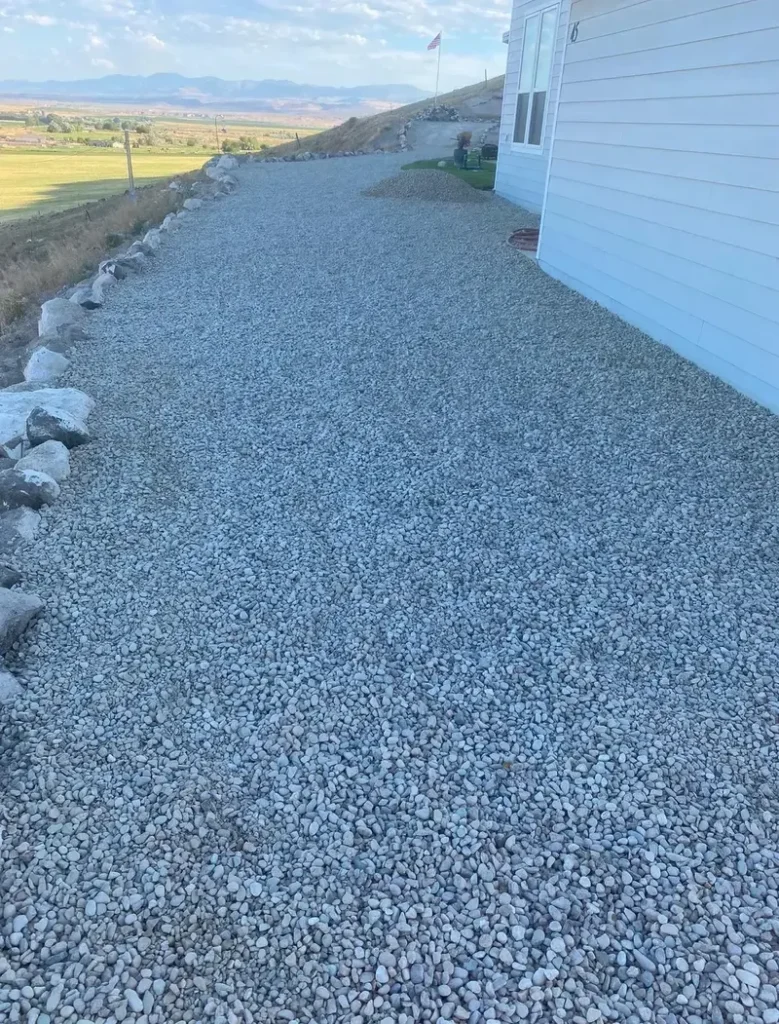
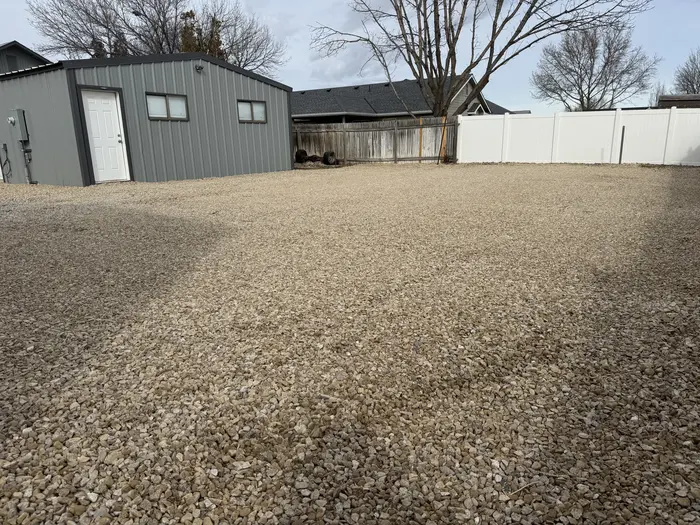
A gravel driveway is a durable, cost-effective, and aesthetically pleasing choice for acreage properties, horse farms, and rural homes across Idaho. However, between heavy winter snow, spring mud season, and bone-dry summer dust, gravel roads require regular upkeep to stay smooth and functional.
If you’re tired of feeling like you’re driving over a corrugated tin roof every time you come home, follow these 5 proven gravel maintenance tips.
1. Always Maintain the “Crown” (The #1 Rule of Drainage)
Water is the absolute enemy of gravel. If your driveway is completely flat across, rainwater and snowmelt will pool in the center. Vehicle tires drive through the standing water, splashing away rock and creating potholes.
A properly graded driveway must have a Crown—meaning the center of the road is 2 to 3 inches higher than the outer edges. This forces water to shed naturally into side ditches.
2. Fix Potholes the Right Way (Raking Gravel In Never Works)
When a pothole forms, the natural instinct is to rake loose gravel from the sides into the hole. Within three days of driving over it, the hole reappears.
Why? The bottom of a pothole contains compacted, water-saturated silt. To fix a pothole permanently:
- Dig out the soft edges until the sides of the hole are vertical.
- Fill the bottom with coarse, crushed aggregate (like 3/4″ minus).
- Tamp and compact the patch thoroughly before topping with fine gravel.
3. Eliminate the “Washboard” Effect
Washboarding—those rhythmic, bone-jarring ripples that form on gravel roads—occurs when vehicles accelerate, brake, or travel too fast over dry gravel. The tires bounce and create harmonic ridges in the rock.
Once washboarding starts, regular scraping or professional grading is necessary to cut down to the base and re-distribute the aggregate evenly.
4. Schedule Periodic Rock Hauling Top-Ups
Over time, gravel is naturally pushed outward by snowplows and driven into the dirt subgrade. Adding a fresh 2-inch lift of crushed aggregate every 2 to 3 years maintains surface thickness and prevents sub-base mud from pumping to the top.
5. Professional Grading & Compacting vs. Box Blade DIY
While pulling a light box blade behind a compact tractor helps with light surface smoothing, it lacks the weight and hydraulic down-pressure needed to cut through hard-packed ruts. A commercial motor grader and heavy vibratory roller reshape the road profile and pack the aggregate so it stays locked together for years.
Restore Your Driveway with Superior Striping
From gravel rock hauling to full-scale driveway grading and refurbishment, our crew has the heavy equipment and local expertise to make your rural drive smooth, solid, and reliable. Contact us today for a free estimate.