Every fall in the Treasure Valley, we get frantic calls from homeowners who look out at their dry, graying driveway and realize winter is just around the corner. By mid-October, morning temperatures in Boise regularly dip into the 30s, even if the afternoon hits a pleasant 65°F.
So, the critical question is: “Is it too cold to sealcoat my driveway in October, or can I still get it done before the snow flies?” Let’s look at the hard temperature cutoffs and what is at stake.
The Golden Rule: 50°F and RISING (Day and Night)
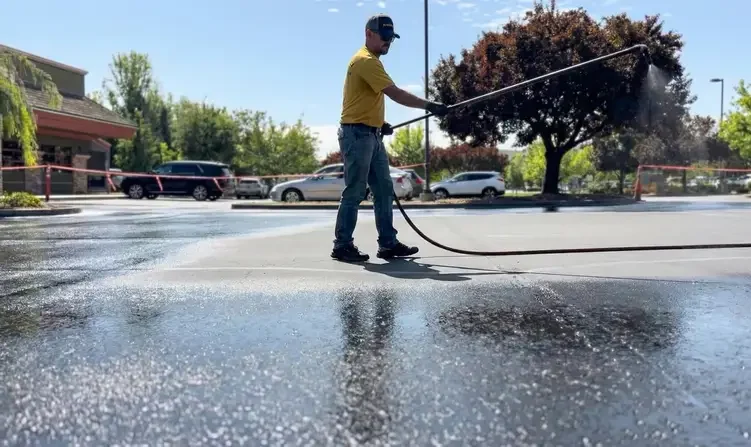
Asphalt sealcoat is a water-based emulsion. For that emulsion to cure properly into a tough, protective shield, it relies on two strict atmospheric requirements:
- Air & Surface Temperatures Must Be at Least 50°F: And staying above 50°F for the entire application and initial drying period.
- Nighttime Lows Must Stay Above 40°F (Preferably 45°F+): If the temperature plunges to 34°F at 3:00 AM while the emulsion is still curing, the chemical cross-linking fails.
What Happens If Sealcoat Freezes Before It Cures?
If an unprincipled contractor applies sealer on a chilly October day and the mercury drops near freezing overnight, the water inside the uncured emulsion turns to ice crystals. This breaks the latex and asphalt bonds.
When the sun comes up the next morning, the sealer won’t bond. It will turn into a chalky, flaking powder that tracks into your house on your shoes and washes off into the street during the first snowmelt.
Why October Is the “Buzzer-Beater” Month in Idaho
In Boise, Meridian, and Nampa, early October often offers brief 2-to-3-day warm windows where daytime temperatures reach 70°F and nighttime lows stay around 46°F. If we catch one of those windows, sealcoating is 100% successful.
However, by late October, consistent cold nights usually force responsible contractors to shut down full-surface sealcoating operations until spring.
Missed the Window? Do THIS Before Winter Instead!
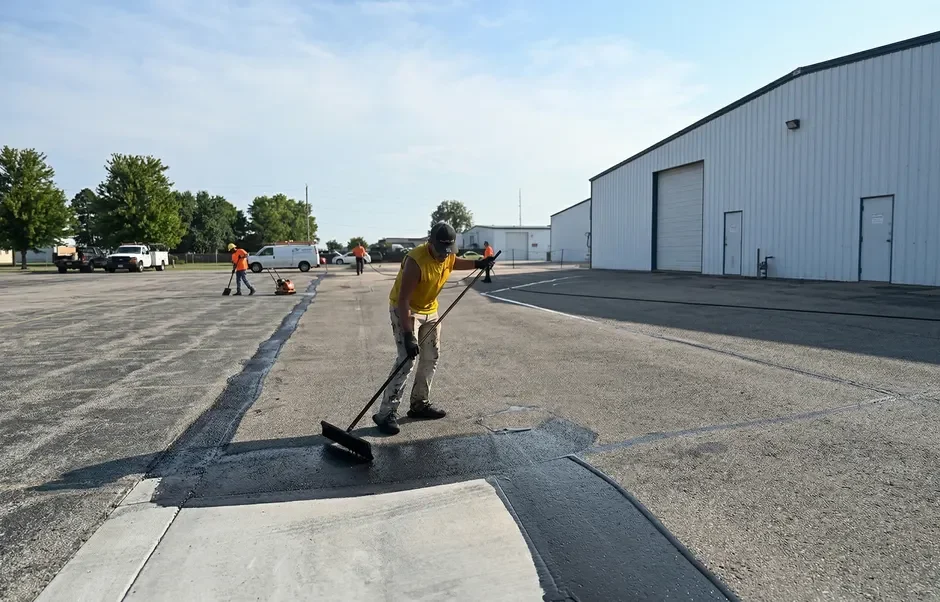
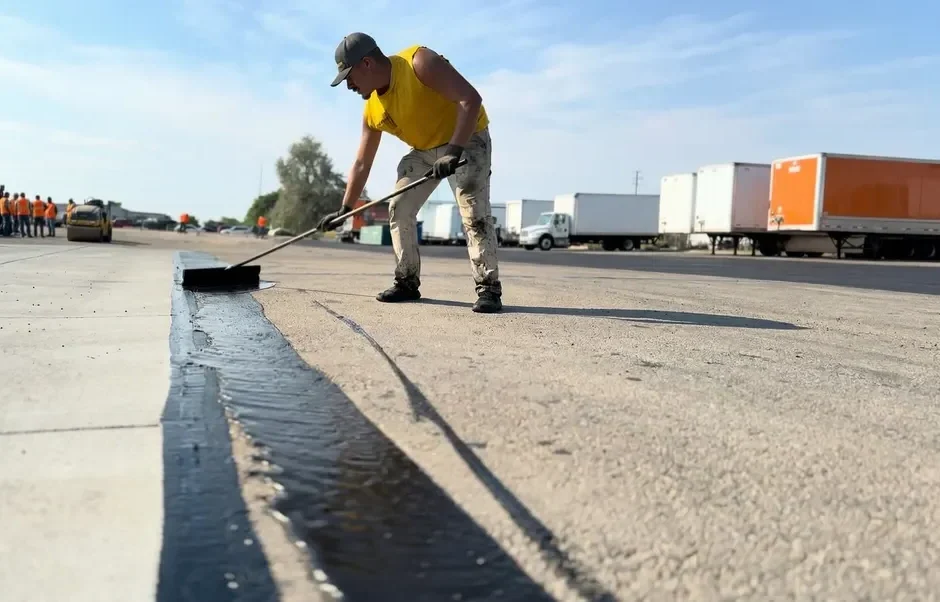
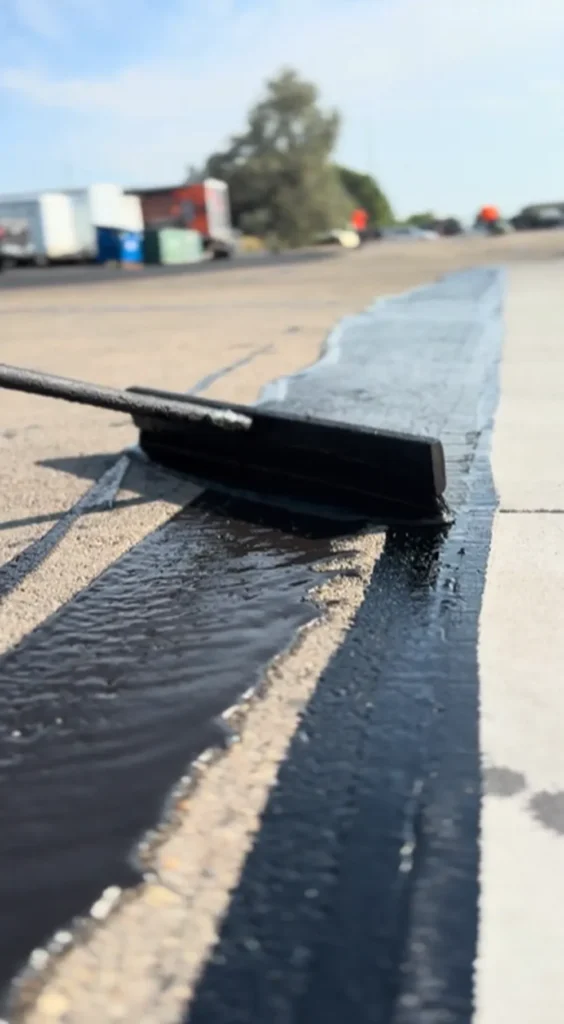
If it is too cold for full sealcoating, do NOT leave your asphalt completely unprotected. Instead, perform Emergency Crack Sealing:
Commercial hot-pour rubberized crack filler is applied at 400°F and cools in minutes, meaning it can be installed in much colder fall weather. Sealing major cracks stops water from entering and freezing underneath your driveway all winter long. You can then sealcoat the surface cleanly next May!
When Does Spring Sealcoating Reopen in Idaho?
Depending on seasonal weather, our full sealcoating season typically resumes around late April to early May once nighttime temperatures reliably stay above 50°F.
Get an Honest Weather Evaluation
Don’t let a fly-by-night contractor ruin your driveway in freezing weather. At Superior Striping, we will check real-time soil and ambient temperatures and give you an honest recommendation. Call our Boise team today!