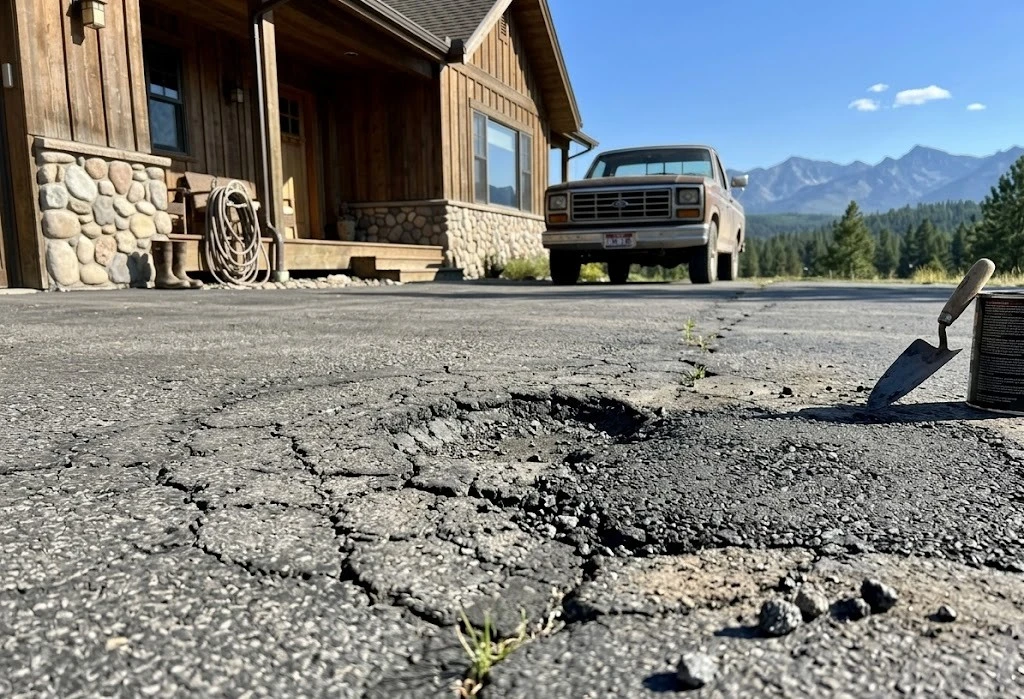
If you’ve moved to Idaho recently from a milder climate like California or the Pacific Northwest, you might be shocked by how quickly driveways, roads, and parking lots start cracking here. You can pave a beautiful new asphalt pad, and within two to three seasons, hairline fractures start creeping across the surface.
Is it bad asphalt? Poor workmanship? While sub-standard paving does happen, the primary culprit is Idaho’s extreme geographic environment. Let’s look at the science of why pavement takes such a beating in the Treasure Valley.
1. The Freeze-Thaw Cycle: Nature’s Hydraulic Jack
In the Treasure Valley, winter doesn’t just get cold and stay cold. During December, January, and February, temperatures frequently hover around 40°F during the day and drop to 18°F at night. This rapid fluctuation occurs 40 to 60 times every single winter.
- During the day, snow and ice melt into liquid water, seeping into microscopic surface pores and tiny seams.
- At night, that water freezes solid. When water transitions to ice, it expands by approximately 9% in volume.
- That expansion generates thousands of pounds of hydraulic pressure, wedging the asphalt aggregate apart from the inside out.
2. Triple-Digit Summer Heat and UV Oxidation
Asphalt is composed of aggregate (gravel and sand) bound together by petroleum bitumen (asphalt cement). That binder contains natural oils that give asphalt its black color and flexibility.
In Boise and Meridian, summer temperatures routinely top 100°F, pushing blacktop surface temperatures past 140°F. Relentless UV radiation bakes those essential oils out of the asphalt. Over time, the pavement turns dull gray, becomes brittle, and loses its ability to flex under vehicle loads.
3. High-Clay Soils in Ada & Canyon Counties
Underneath that layer of crushed gravel base lies native Idaho soil. Much of our valley contains heavy clay and silt. Clay holds immense amounts of water and undergoes dramatic expansion and contraction cycles. When the subgrade shifts underneath heavy trucks or RVs, the rigid asphalt on top snaps.
How to Stop the Damage Before It Spreads
You can’t change Idaho’s weather, but you can protect your investment with two proven maintenance steps:
- Keep Water Out with Hot-Pour Crack Filling: Seal every crack wider than 1/4″ before the first winter freeze to deny water entry.
- Replenish Binder with Regular Sealcoating: Applying commercial sealcoat every 2 to 3 years locks in vital oils and shields against solar UV degradation.
Need an Asphalt Checkup?
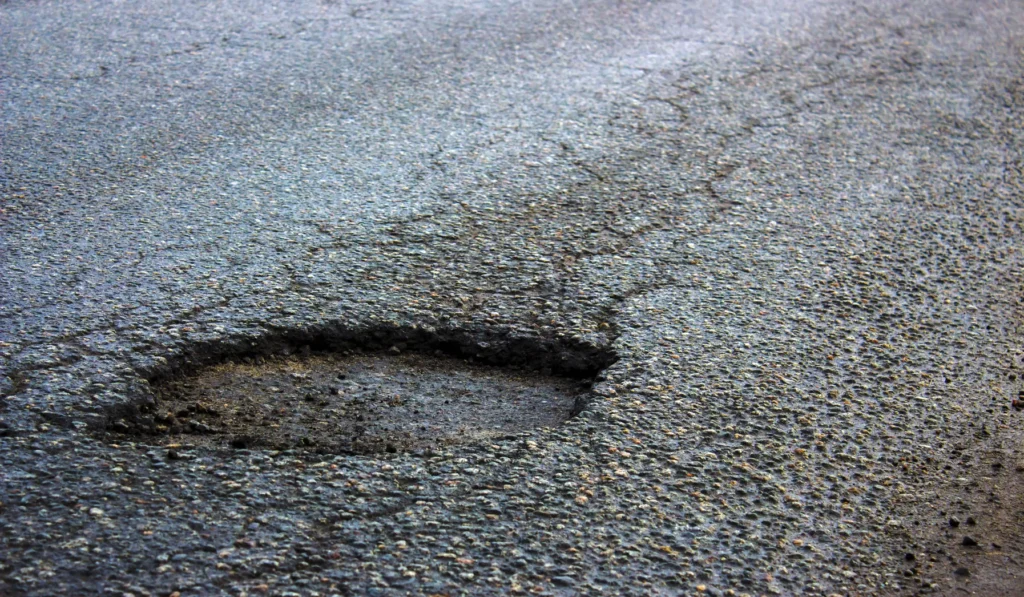
If your driveway or commercial lot is showing signs of weather fatigue, don’t wait for cracks to become potholes. Contact Superior Striping for an honest evaluation and preventative maintenance plan.